GDPR & Data Protection (DPO)
Γίνετε ο Υπεύθυνος Προστασίας Δεδομένων που χρειάζεται ο οργανισμός σας. Κατακτήστε τον GDPR, τον ελληνικό ν. 4624/2019, το αρχείο δραστηριοτήτων, τις DPIA και τη διαχείριση περιστατικών — με πρότυπα και πραγματικές μελέτες περίπτωσης.
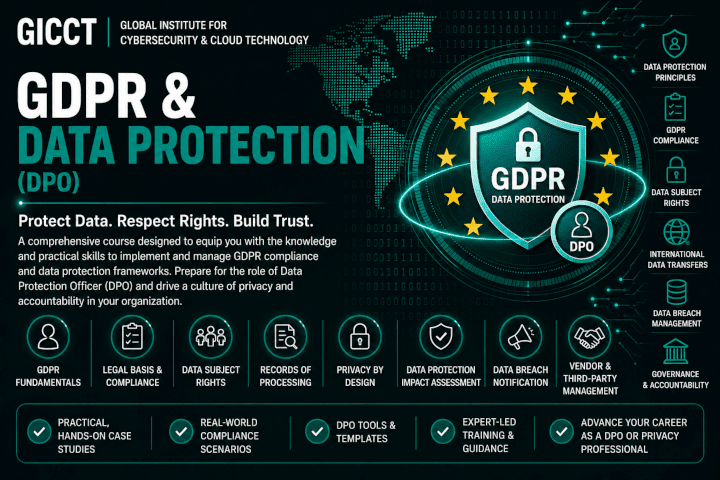
Το πρόγραμμα GDPR & Data Protection σᾶς προετοιμάζει να αναλάβετε τον ρόλο του Υπευθύνου Προστασίας Δεδομένων (DPO) — με τη νομική γνώση, τα εργαλεία και την πρακτική κρίση που απαιτεῖ η θέση. Σε 35 ώρες περνᾶτε από το γράμμα του Κανονισμού στην καθημερινή του εφαρμογή.
Ο DPO δεν είναι διακοσμητικός ρόλος. Είναι θέση ευθύνης, με νομικές συνέπειες — και ο οργανισμός σας εξαρτᾶται από το αν ξέρετε τι κάνετε.
Σε ποιους απευθύνεται
Απευθύνεται σε όσους έχουν ή πρόκειται να αναλάβουν ρόλο DPO, σε νομικούς και συμβούλους συμμόρφωσης, σε στελέχη IT με ευθύνη προστασίας δεδομένων, και σε επιχειρηματίες που θέλουν να καταλάβουν τις πραγματικές τους υποχρεώσεις.
Τι θα μπορείτε να κάνετε
Θα συντάσσετε και θα διατηρεῖτε Αρχείο Δραστηριοτήτων Επεξεργασίας, θα εκτελεῖτε Εκτιμήσεις Αντικτύπου (DPIA), θα διαχειρίζεστε αιτήματα υποκειμένων, θα χειρίζεστε περιστατικά παραβίασης δεδομένων μέσα στην προθεσμία των 72 ωρών, και θα ελέγχετε συμβάσεις με εκτελοῦντες την επεξεργασία.
Ελληνικό πλαίσιο
Η ύλη καλύπτει τον GDPR μαζί με τον ελληνικό ν. 4624/2019 και την πρακτική της Αρχής Προστασίας Δεδομένων Προσωπικού Χαρακτήρα — τις αποφάσεις και τα πρόστιμα που δείχνουν πώς εφαρμόζεται ο νόμος στην Ελλάδα, όχι μόνο στα χαρτιά.
Πρακτικά εργαλεία
Φεύγετε με πρότυπα εγγράφων και μελέτες περίπτωσης από πραγματικές υποθέσεις — έτοιμα να προσαρμοστοῦν στον οργανισμό σας από την πρώτη μέρα.
Σε ποιους απευθύνεται
- Υποψήφιοι και εν ενεργεία Υπεύθυνοι Προστασίας Δεδομένων (DPO)
- Νομικοί και σύμβουλοι συμμόρφωσης
- Στελέχη IT με ευθύνη για την προστασία δεδομένων
- Επιχειρηματίες που θέλουν να κατανοήσουν τις υποχρεώσεις τους
Ύλη προγράμματος
Θεμέλια του GDPR
Αρχές επεξεργασίας, νομικές βάσεις, δικαιώματα υποκειμένων και ο ρόλος του DPO.
Ελληνικό πλαίσιο & ν. 4624/2019
Η εθνική νομοθεσία, η πρακτική της Αρχής Προστασίας Δεδομένων και τα πρόστιμα που έχουν επιβληθεῖ.
Αρχείο Δραστηριοτήτων Επεξεργασίας
Χαρτογράφηση ροών δεδομένων και σύνταξη του υποχρεωτικού αρχείου (ROPA).
Εκτίμηση Αντικτύπου (DPIA)
Πότε απαιτεῖται DPIA, πώς εκτελεῖται και πώς τεκμηριώνεται.
Αιτήματα υποκειμένων
Διαχείριση αιτημάτων πρόσβασης, διαγραφής και φορητότητας μέσα στις προθεσμίες.
Παραβιάσεις δεδομένων
Χειρισμός περιστατικού, γνωστοποίηση στην Αρχή εντός 72 ωρών και ενημέρωση υποκειμένων.
Συμβάσεις & τρίτοι
Έλεγχος συμβάσεων με εκτελοῦντες την επεξεργασία και διεθνεῖς διαβιβάσεις δεδομένων.
Συχνές ερωτήσεις
Πρέπει ο οργανισμός μου να έχει DPO;
Εξαρτᾶται από τη φύση και την κλίμακα της επεξεργασίας. Το πρόγραμμα καλύπτει αναλυτικά πότε ο ορισμός DPO είναι υποχρεωτικός βάσει GDPR και ελληνικής νομοθεσίας, και πότε είναι απλώς καλή πρακτική.
Χρειάζομαι νομικό υπόβαθρο;
Όχι. Το πρόγραμμα χτίζει τη νομική γνώση από τα θεμέλια, με έμφαση στην πρακτική εφαρμογή. Νομικοί, στελέχη IT και διοικητικά στελέχη το παρακολουθοῦν εξίσου επιτυχώς.
Καλύπτει την ελληνική νομοθεσία;
Ναι. Πέρα από τον GDPR, καλύπτουμε τον ν. 4624/2019 και την πρακτική της Αρχής Προστασίας Δεδομένων — τις αποφάσεις και τα πρόστιμα που δείχνουν πώς εφαρμόζεται ο νόμος στην Ελλάδα.
Θα πάρω πρότυπα έγγραφα;
Ναι. Λαμβάνετε πρότυπα για αρχείο δραστηριοτήτων, DPIA, πολιτικές και διαδικασίες γνωστοποίησης παραβίασης, έτοιμα να προσαρμοστοῦν στον οργανισμό σας.