Malware Analysis
Ανατέμνετε πραγματικό κακόβουλο λογισμικό με ασφάλεια. Στατική και δυναμική ανάλυση, θεμέλια reverse engineering και συμπεριφορική ανίχνευση — οι δεξιότητες πίσω από τη σύγχρονη ανάλυση απειλών και την απόκριση σε περιστατικά.
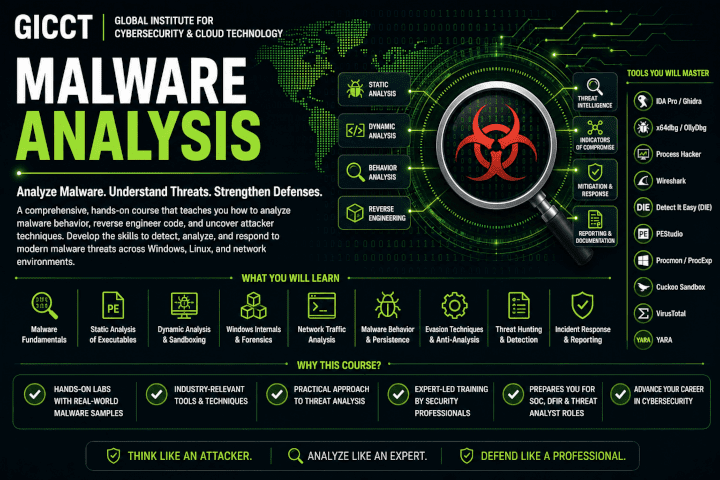
Το Malware Analysis σᾶς μαθαίνει να ανατέμνετε πραγματικό κακόβουλο λογισμικό — με ασφάλεια. Σε 38 ώρες κατακτᾶτε τη στατική και δυναμική ανάλυση, τα θεμέλια του reverse engineering και τη συμπεριφορική ανίχνευση: τις δεξιότητες πίσω από τη σύγχρονη ανάλυση απειλών και την απόκριση σε περιστατικά.
Όταν χτυπήσει ένα περιστατικό, κάποιος πρέπει να απαντήσει στο ερώτημα «τι ακριβώς κάνει αυτό το αρχείο;». Αυτό το πρόγραμμα σᾶς κάνει αυτόν τον άνθρωπο.
Σε ποιους απευθύνεται
Απευθύνεται σε αναλυτές ασφάλειας και SOC, σε ομάδες απόκρισης σε περιστατικά, και σε επαγγελματίες threat intelligence που θέλουν να προχωρήσουν από την ανάγνωση αναφορών στη δική τους ανάλυση.
Τι θα μπορείτε να κάνετε
Θα στήνετε ασφαλές εργαστήριο ανάλυσης, θα εκτελεῖτε στατική ανάλυση χωρίς εκτέλεση του δείγματος, θα παρατηρεῖτε τη συμπεριφορά του σε ελεγχόμενο περιβάλλον, θα αναγνωρίζετε τεχνικές απόκρυψης και anti-analysis, και θα εξάγετε δείκτες παραβίασης (IOCs) που τροφοδοτοῦν την άμυνα του οργανισμού.
Ασφάλεια πρώτα
Κάθε ανάλυση γίνεται σε αυστηρά απομονωμένα, ελεγχόμενα εργαστήρια. Το πρόγραμμα ξεκινᾶ διδάσκοντας πώς να δουλεύετε με κακόβουλο λογισμικό χωρίς να θέσετε σε κίνδυνο εσάς ή τον οργανισμό σας.
Πιστοποίηση
Η ύλη προετοιμάζει για πιστοποιήσεις τύπου GREM και για ρόλους ανάλυσης απειλών σε ομάδες ασφάλειας και CERT.
Σε ποιους απευθύνεται
- Αναλυτές ασφάλειας και SOC που θέλουν βαθύτερη τεχνική ικανότητα
- Ομάδες απόκρισης σε περιστατικά (incident response)
- Επαγγελματίες threat intelligence
- Όσοι στοχεύουν σε πιστοποίηση GREM ή ρόλο σε CERT
Ύλη προγράμματος
Ασφαλές εργαστήριο ανάλυσης
Στήσιμο απομονωμένου περιβάλλοντος και κανόνες ασφαλοῦς χειρισμού δειγμάτων.
Στατική ανάλυση
Εξέταση δείγματος χωρίς εκτέλεση — strings, headers, imports και δομή αρχείου.
Δυναμική ανάλυση
Παρατήρηση συμπεριφοράς σε ελεγχόμενη εκτέλεση: αρχεία, μητρώο, δίκτυο, διεργασίες.
Θεμέλια reverse engineering
Ανάγνωση assembly, χρήση disassembler και debugger για την κατανόηση της λογικής.
Τεχνικές απόκρυψης & anti-analysis
Packing, obfuscation και ανίχνευση sandbox — και πώς τις παρακάμπτετε.
Εξαγωγή IOCs & αναφορά
Παραγωγή δεικτών παραβίασης και σύνταξη αναφοράς που τροφοδοτεῖ άμεσα την άμυνα.
Συχνές ερωτήσεις
Είναι επικίνδυνο να δουλεύω με πραγματικό malware;
Όχι, όπως το κάνουμε εδώ. Κάθε ανάλυση γίνεται σε αυστηρά απομονωμένα εργαστήρια που παρέχει το GICCT, και το πρόγραμμα ξεκινᾶ διδάσκοντας ακριβώς τους κανόνες ασφαλοῦς χειρισμού.
Χρειάζομαι γνώση προγραμματισμού;
Βοηθᾶ σημαντικά. Το πρόγραμμα είναι προχωρημένου επιπέδου· εξοικείωση με προγραμματισμό και κατανόηση λειτουργικών συστημάτων κάνουν την ύλη πολύ πιο προσιτή.
Θα μάθω reverse engineering;
Θα μάθετε τα θεμέλια — ανάγνωση assembly, χρήση disassembler και debugger — στον βαθμό που χρειάζεται για την ανάλυση κακόβουλου λογισμικού. Δεν είναι πλήρες πρόγραμμα reverse engineering, αλλά σᾶς δίνει τη βάση.
Πόσο διαρκεῖ και πώς παραδίδεται;
Το πρόγραμμα διαρκεῖ 38 ώρες και παραδίδεται online ζωντανά ή υβριδικά, με πλήρη πρόσβαση στα απομονωμένα εργαστήρια ανάλυσης.