Web Application Security (OWASP)
Βρείτε και διορθώστε τις ευπάθειες που έχουν σημασία. Χτισμένο γύρω από το OWASP Top 10, το πρόγραμμα διδάσκει ασφαλή κωδικοποίηση, δοκιμές και έλεγχο κώδικα για web εφαρμογές και APIs.
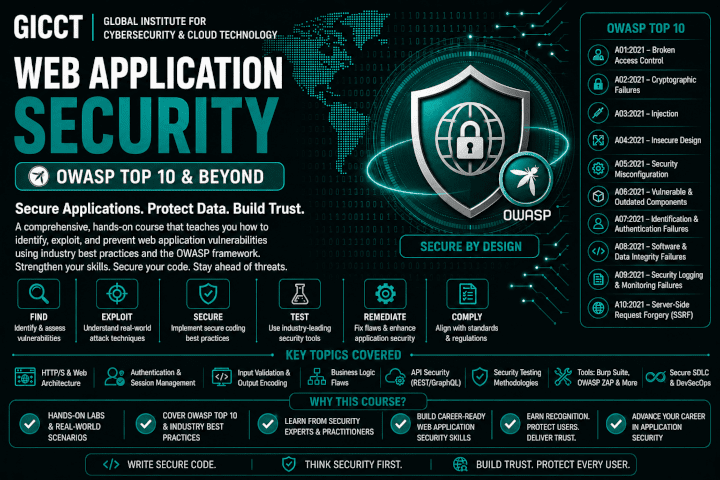
Το Web Application Security σᾶς μαθαίνει να βρίσκετε και να διορθώνετε τις ευπάθειες που πραγματικά έχουν σημασία. Χτισμένο γύρω από το OWASP Top 10, το πρόγραμμα καλύπτει ασφαλή κωδικοποίηση, δοκιμές και έλεγχο κώδικα για web εφαρμογές και APIs.
Οι περισσότερες επιτυχημένες επιθέσεις σήμερα δεν χτυποῦν το δίκτυο — χτυποῦν την εφαρμογή. Εδώ μαθαίνετε να κλείνετε αυτή την πόρτα.
Σε ποιους απευθύνεται
Απευθύνεται σε developers που θέλουν να γράφουν ασφαλή κώδικα, σε επαγγελματίες ασφάλειας που ελέγχουν εφαρμογές, και σε ομάδες που συντηροῦν web υπηρεσίες ή APIs σε παραγωγή.
Τι θα μπορείτε να κάνετε
Θα αναγνωρίζετε και θα εκμεταλλεύεστε τις ευπάθειες του OWASP Top 10 — injection, σπασμένη ταυτοποίηση, λανθασμένες ρυθμίσεις, XSS και τα υπόλοιπα — ώστε να καταλάβετε πώς λειτουργοῦν στ’ αλήθεια. Και μετά θα μάθετε να τις διορθώνετε: ασφαλής κωδικοποίηση, σωστή επικύρωση εισόδου, ασφάλεια API και έλεγχος κώδικα με ματιά επιτιθέμενου.
Πώς διδάσκεται
Κάθε ευπάθεια εξασκείται σε σκόπιμα ευάλωτες εφαρμογές μέσα σε ελεγχόμενο εργαστήριο. Βλέπετε την επίθεση, γράφετε τη διόρθωση, επαληθεύετε ότι έπιασε.
Γιατί OWASP
Το OWASP Top 10 δεν είναι ακαδημαϊκή λίστα — είναι η αποτύπωση των ευπαθειών που όντως εκμεταλλεύονται οι επιτιθέμενοι. Χτίζοντας την ύλη γύρω από αυτό, εστιάζουμε στο τι έχει πραγματική σημασία.
Σε ποιους απευθύνεται
- Developers που θέλουν να γράφουν ασφαλή κώδικα
- Επαγγελματίες ασφάλειας που ελέγχουν web εφαρμογές
- Ομάδες που συντηροῦν web υπηρεσίες και APIs σε παραγωγή
- Penetration testers που εστιάζουν σε εφαρμογές
Ύλη προγράμματος
Το OWASP Top 10
Οι δέκα κατηγορίες ευπαθειών που όντως εκμεταλλεύονται οι επιτιθέμενοι — και γιατί.
Injection & επικύρωση εισόδου
SQL injection, command injection και η σωστή επικύρωση που τις σταματᾶ.
Ταυτοποίηση & διαχείριση συνεδρίας
Σπασμένη ταυτοποίηση, session management και ασφαλής υλοποίηση.
Cross-Site Scripting & client-side
XSS σε όλες τις μορφές του, CSRF και η προστασία της πλευράς του πελάτη.
Ασφάλεια API
Προστασία REST και GraphQL APIs — έλεγχος πρόσβασης, rate limiting, exposure δεδομένων.
Ασφαλής κωδικοποίηση & code review
Πρακτικές secure coding και έλεγχος κώδικα με τη ματιά του επιτιθέμενου.
Συχνές ερωτήσεις
Χρειάζομαι εμπειρία σε προγραμματισμό;
Ναι, βασική. Το πρόγραμμα προϋποθέτει εξοικείωση με ανάπτυξη web εφαρμογών, ώστε να μπορεῖτε να διαβάσετε και να διορθώσετε κώδικα, όχι μόνο να εντοπίσετε την ευπάθεια.
Είναι για developers ή για pentesters;
Και για τους δύο. Οι developers μαθαίνουν να γράφουν κώδικα που δεν σπάει· οι pentesters μαθαίνουν να βρίσκουν τι έσπασε. Και οι δύο πλευρές ωφελοῦνται από το να καταλαβαίνουν την άλλη.
Θα δουλέψω σε πραγματικές εφαρμογές;
Θα δουλέψετε σε σκόπιμα ευάλωτες εφαρμογές μέσα σε ελεγχόμενο εργαστήριο — βλέπετε την επίθεση, γράφετε τη διόρθωση, επαληθεύετε ότι έπιασε.
Πόσο διαρκεῖ και πώς παραδίδεται;
Το πρόγραμμα διαρκεῖ 36 ώρες και παραδίδεται online ζωντανά ή υβριδικά, με hands-on εργαστήρια σε κάθε ενότητα.